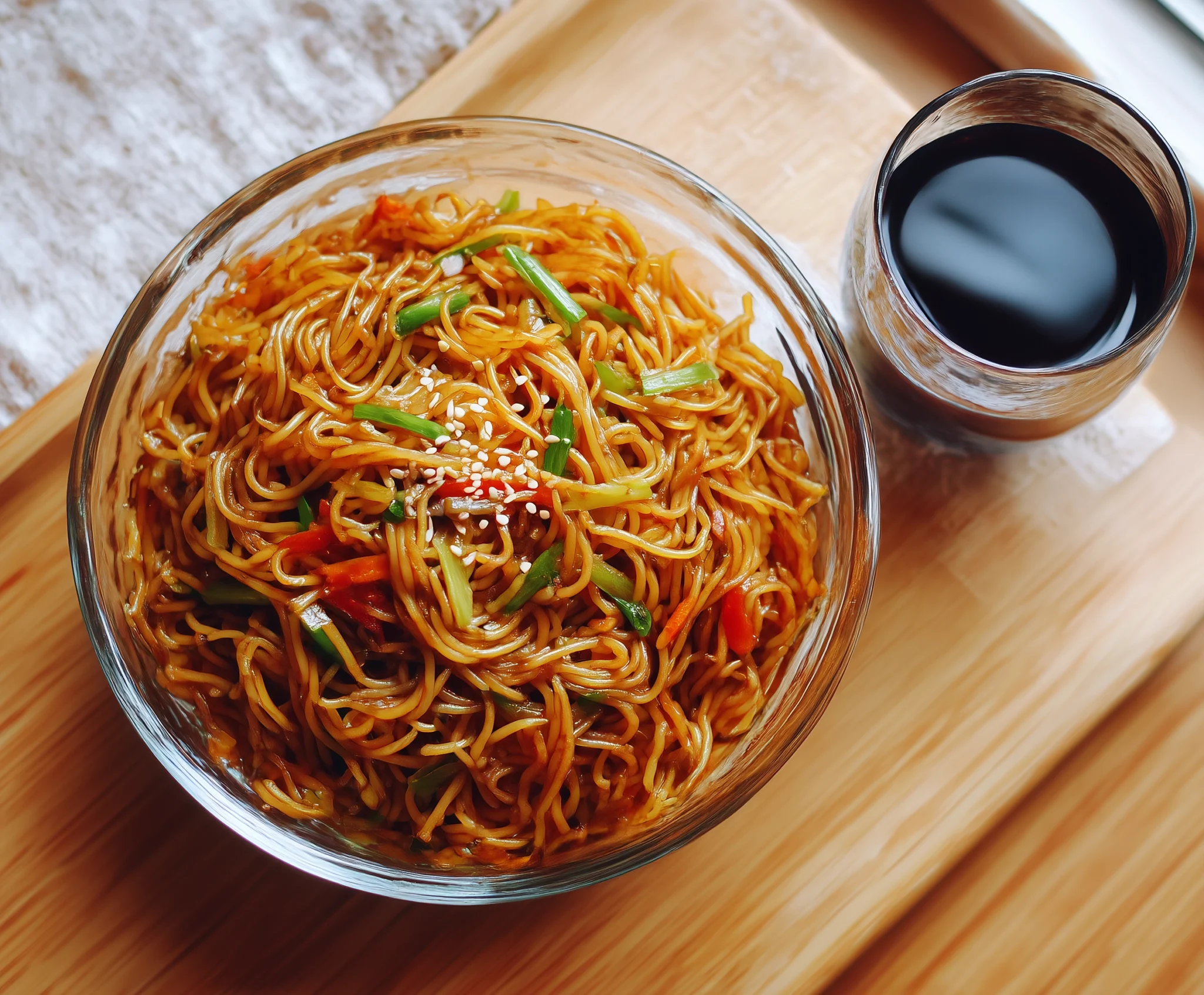
Korean Soy Sauce Noodles offer a perfect blend of umami, mild sweetness, and comforting noodles that cook quickly and deliver maximum flavor. This recipe focuses on simplicity without sacrificing authenticity. With fresh vegetables, a balanced soy-based sauce, and carefully cooked noodles, this dish is ideal for a quick weeknight meal or a flavorful lunch that feels both light and satisfying.
Ingredients List
- 200 grams of noodles (egg noodles or ramen noodles)
- 2 tablespoons soy sauce
- 1 tablespoon sesame oil
- 1 teaspoon sugar or honey
- 2 cloves garlic minced
- 1 small carrot julienned
- ½ bell pepper thinly sliced
- 1 small zucchini julienned
- 2 spring onions chopped
- Toasted sesame seeds for garnish
Step-by-Step Instructions
Step 1: Cook the Noodles
Boil noodles according to package instructions until just tender. Drain and rinse under cold water to stop cooking. Set aside.
Step 2: Prepare the Sauce
In a small bowl, mix soy sauce, sesame oil, sugar or honey, and minced garlic until fully combined.
Step 3: Stir-Fry the Vegetables
Heat a pan over medium heat. Add carrots, bell pepper, and zucchini, sautéing for 2–3 minutes until slightly tender but still crisp.
Step 4: Combine Noodles and Sauce
Add the cooked noodles to the pan with vegetables. Pour in the sauce and toss gently to coat all noodles evenly.
Step 5: Finish and Garnish
Turn off heat and add spring onions. Sprinkle toasted sesame seeds on top before serving. Serve immediately for best flavor.
Cook Time
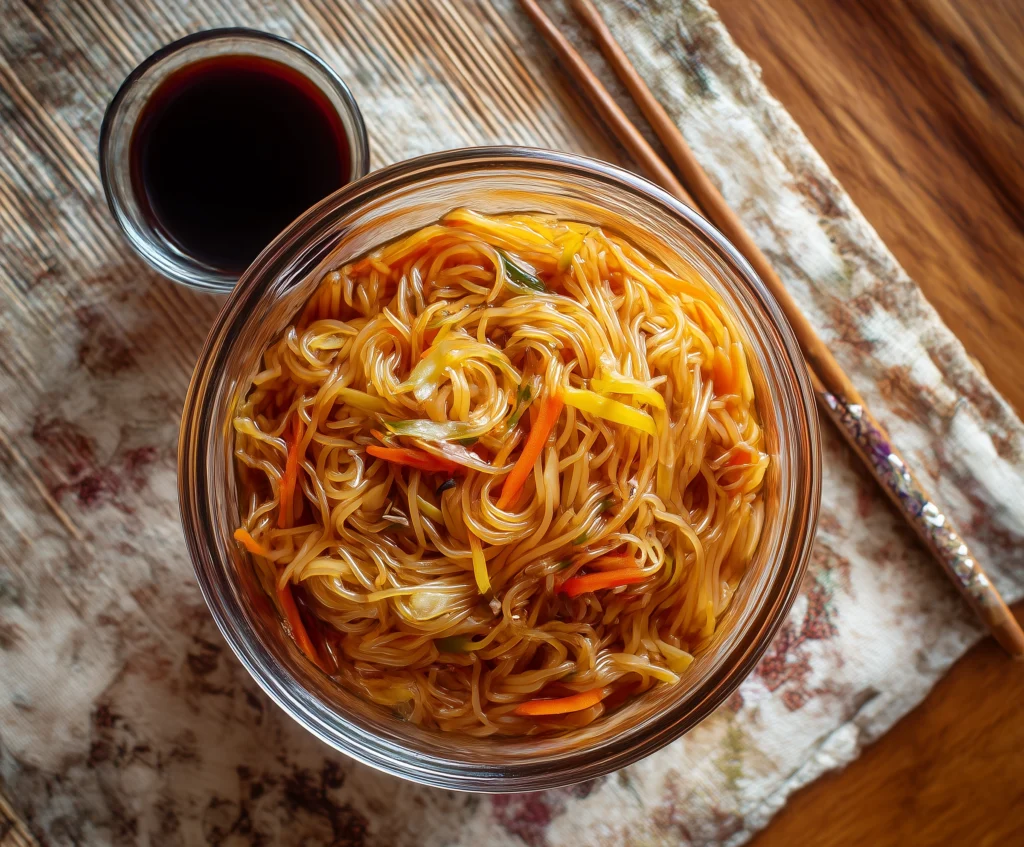
Total preparation and cooking time is approximately fifteen minutes, making this a fast, weeknight-friendly recipe.
Servings
Serves two to three people as a main meal.
Nutritional Information (approx. per serving)
This dish provides moderate calories, carbohydrates from noodles, protein from optional egg noodles, and vitamins from fresh vegetables. Nutritional content may vary based on noodle type and sauce adjustments.
Storage Instructions
Best enjoyed fresh. Store leftovers in an airtight container in the refrigerator for up to twenty four hours. Reheat gently to maintain texture and flavor.
Suggestions
Serve as a light main dish or with grilled protein such as chicken or tofu. You may add chili flakes or a drizzle of extra sesame oil to enhance flavor. This dish pairs well with kimchi or pickled vegetables.
Seasonal Relevance
This noodle recipe is suitable year-round and shines particularly in cooler months as a comforting, quick meal. Fresh vegetables used in the stir-fry are flexible depending on seasonal availability.
Conclusion
Simple Korean Soy Sauce Noodles combine ease, speed, and balanced flavor into a single dish. The careful blend of fresh vegetables, savory sauce, and perfectly cooked noodles ensures a satisfying meal that feels both authentic and effortless. It is a recipe designed for home cooks seeking reliable flavor with minimal effort.
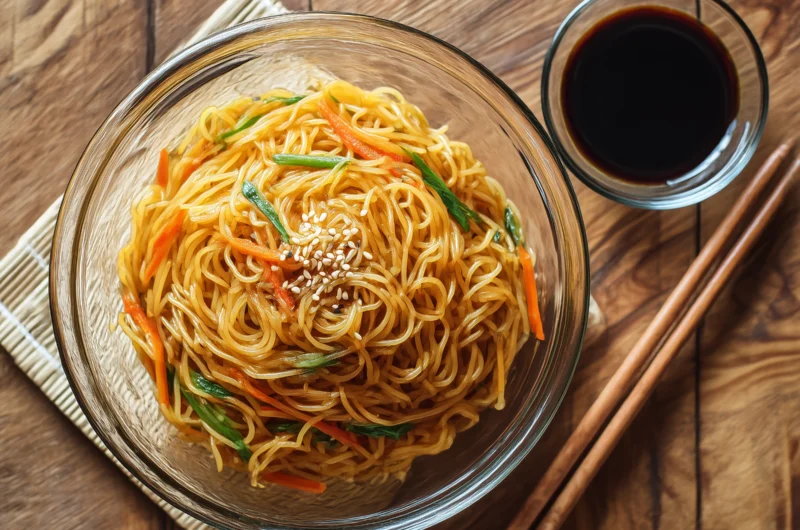
Simple Korean Soy Sauce Noodles Recipe
2–3
servings5
minutes10
minutes350 per serving
kcalA quick and flavorful noodle dish that brings the authentic taste of Korean soy sauce noodles to your kitchen. Easy to prepare, packed with fresh vegetables, and perfectly balanced with a savory soy-based sauce. Ideal for a fast lunch or a weeknight dinner.
Ingredients
200 grams noodles (egg noodles or ramen noodles)
2 tablespoons soy sauce
1 tablespoon sesame oil
1 teaspoon sugar or honey
2 cloves garlic, minced
1 small carrot, julienned
½ bell pepper, thinly sliced
1 small zucchini, julienned
2 spring onions, chopped
Toasted sesame seeds for garnish
Directions
- Cook the noodles according to package instructions until tender, then drain and rinse under cold water.
- In a small bowl, mix soy sauce, sesame oil, sugar or honey, and minced garlic.
- Heat a pan over medium heat and sauté carrots, bell pepper, and zucchini for 2–3 minutes until slightly tender.
- Add the cooked noodles to the pan and pour in the sauce. Toss gently to coat evenly.
- Turn off heat, add spring onions, and sprinkle toasted sesame seeds on top before serving.
Recipe Video
Notes
- Adjust soy sauce and sugar to taste for balance.
- Can add protein like chicken or tofu to make it a main dish.
- Use seasonal vegetables based on availability.