
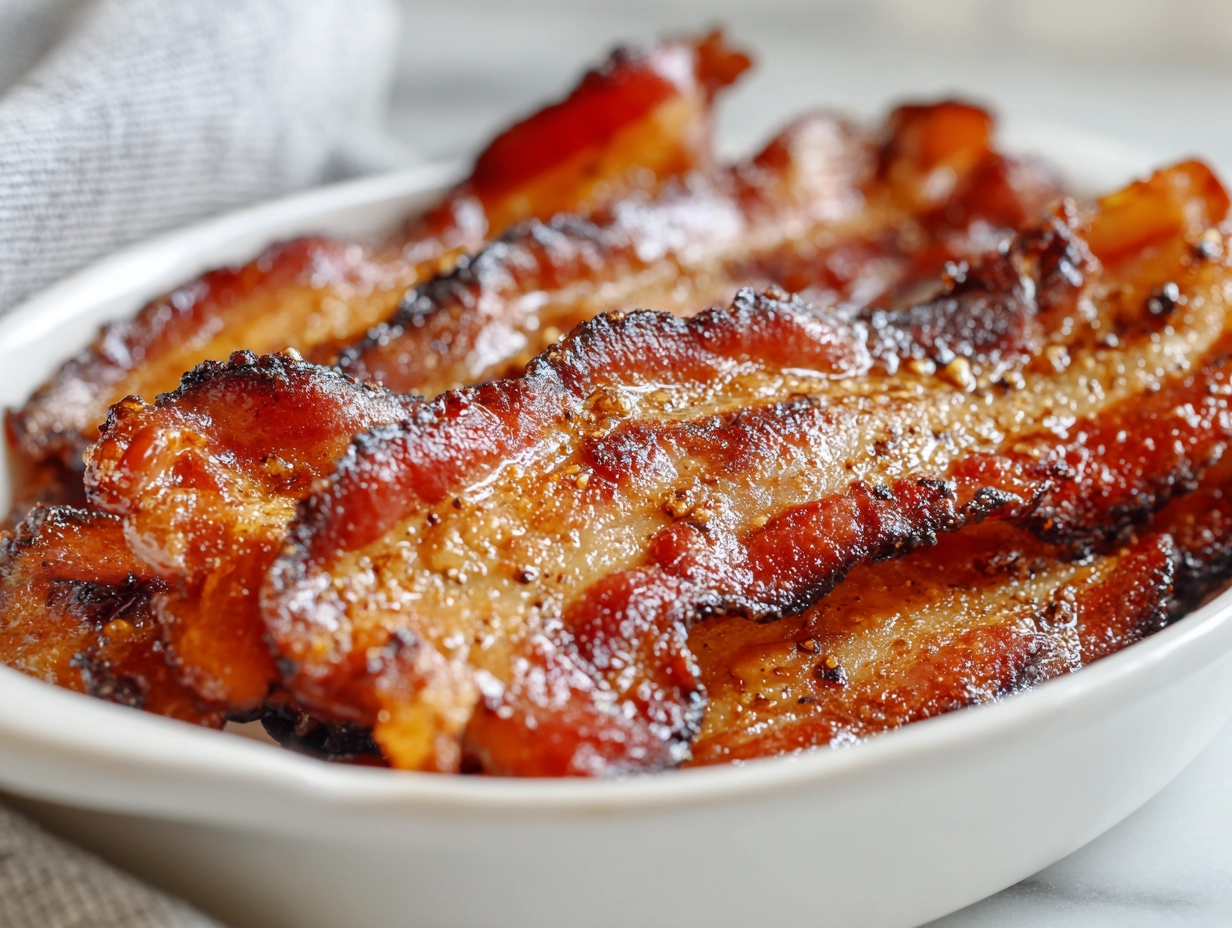
Few aromas rival the irresistible smell of bacon cooking, but frying on the stovetop can be messy and inconsistent. Baking bacon in the oven is the chef’s secret to achieving perfectly crispy, evenly cooked strips without the splatter. This method is effortless, reliable, and ideal for cooking larger batches, whether for breakfast, brunch gatherings, or as a garnish for your favorite recipes.
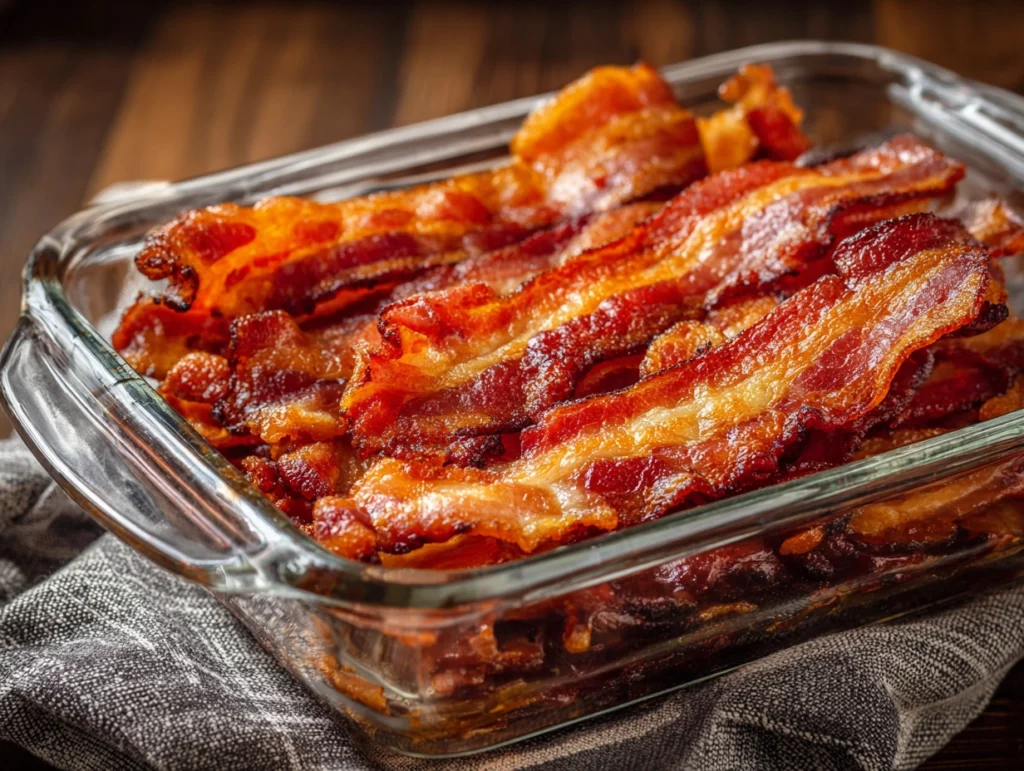
Ingredients List
- 12 slices thick-cut bacon (or regular, based on preference)
- Optional: black pepper, maple syrup, or brown sugar for flavor variations
Step-by-Step Instructions
Step 1: Preheat the oven
Preheat your oven to 400°F (200°C). This temperature ensures bacon becomes crisp without burning.
Step 2: Prepare the baking sheet
Line a large baking sheet with parchment paper or foil for easy cleanup. For extra crispiness, place a wire rack on top of the sheet.
Step 3: Arrange the bacon
Lay bacon slices in a single layer on the prepared sheet or rack. Avoid overlapping to ensure even cooking.
Step 4: Bake the bacon
Place the tray on the middle rack and bake for 15–20 minutes. Cooking time depends on thickness—keep a close eye in the final minutes for your desired crispness.
Step 5: Drain and serve
Once cooked, use tongs to transfer bacon onto a plate lined with paper towels. Let excess fat drain before serving.
Cook Time
15–20 minutes
Servings
4 servings
Nutritional Information (approx. per serving)
- Calories: 230 kcal
- Protein: 12 g
- Fat: 20 g
- Carbohydrates: 1 g
- Fiber: 0 g
- Sugar: 0 g (varies with flavor additions)
Storage Instructions
- Refrigerate cooled bacon in an airtight container for up to 4 days.
- To reheat, place in a skillet or oven at 350°F for 5 minutes to restore crispness.
- Freeze cooked bacon between parchment layers for up to 1 month. Reheat directly from frozen.
Suggestions
- Brush bacon with maple syrup or sprinkle with brown sugar before baking for a sweet-savory twist.
- Add a dusting of cracked black pepper or smoked paprika for extra flavor.
- Use crispy bacon to elevate salads, burgers, sandwiches, or pasta dishes.
Seasonal Relevance
While bacon is a year-round favorite, oven-baked bacon shines during the holiday season when cooking for a crowd. It’s also a brunch essential in spring and summer, perfect for gatherings without the stress of stovetop splatter.
Conclusion
Bacon baked in the oven is the simplest way to achieve consistent crispness with minimal mess. This chef-approved method delivers perfectly cooked strips every time, making it a game-changer for both casual mornings and special occasions. Once you try this technique, you’ll never return to the frying pan again.
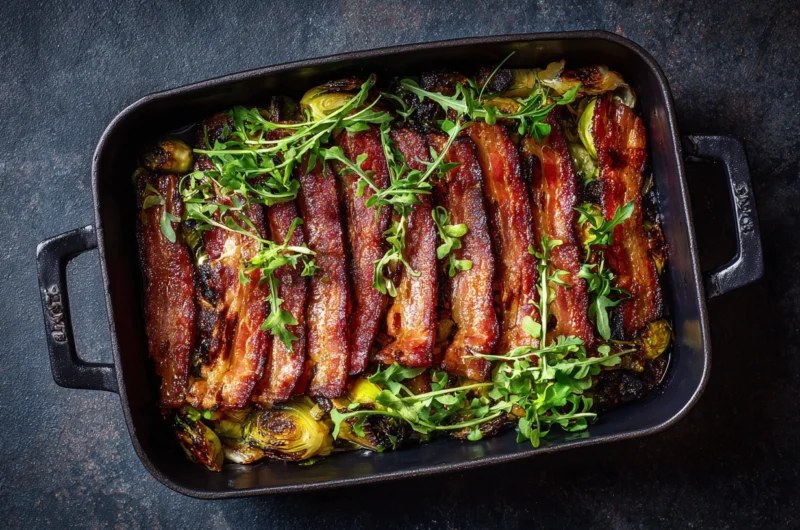
Bacon in the Oven Recipe Crispy
4
servings5
minutes15
minutes230
kcalA foolproof method for perfectly crispy bacon baked in the oven,no splatter, no mess. This easy recipe delivers evenly cooked, golden strips every time, ideal for breakfast, brunch, or as a garnish for your favorite dishes.
Ingredients
12 slices thick-cut bacon (or regular bacon)
Optional: cracked black pepper, maple syrup, or brown sugar for flavor variations
Directions
- Preheat oven to 400°F (200°C).
- Line a baking sheet with parchment paper or foil. For extra crispness, place a wire rack on top.
- Arrange bacon slices in a single layer, ensuring they don’t overlap.
- Bake for 15–20 minutes, checking near the end for desired crispness.
- Remove bacon with tongs and place on paper towels to drain excess fat.
- Serve immediately or store for later use.
Recipe Video
Notes
- For chewier bacon, bake at 350°F for 25–30 minutes.
- A wire rack ensures maximum crispiness, but baking directly on parchment gives a slightly chewier bite.
- Save rendered bacon fat in a jar for cooking eggs, roasting vegetables, or seasoning dishes.
- Store cooked bacon in the fridge for up to 4 days or freeze up to 1 month.
FAQs
Q1: Can I bake bacon at a lower temperature?
Yes, baking at 350°F will take longer (around 25–30 minutes), but it gives more control and slightly chewier results.
Q2: Is it necessary to use a wire rack when baking bacon?
No, but a rack allows fat to drip away, making bacon crisper. Directly on parchment also works well and results in slightly chewier strips.
Q3: What should I do with the leftover bacon grease?
Strain and store it in a heatproof jar. It’s excellent for frying eggs, roasting vegetables, or adding smoky depth to savory dishes.