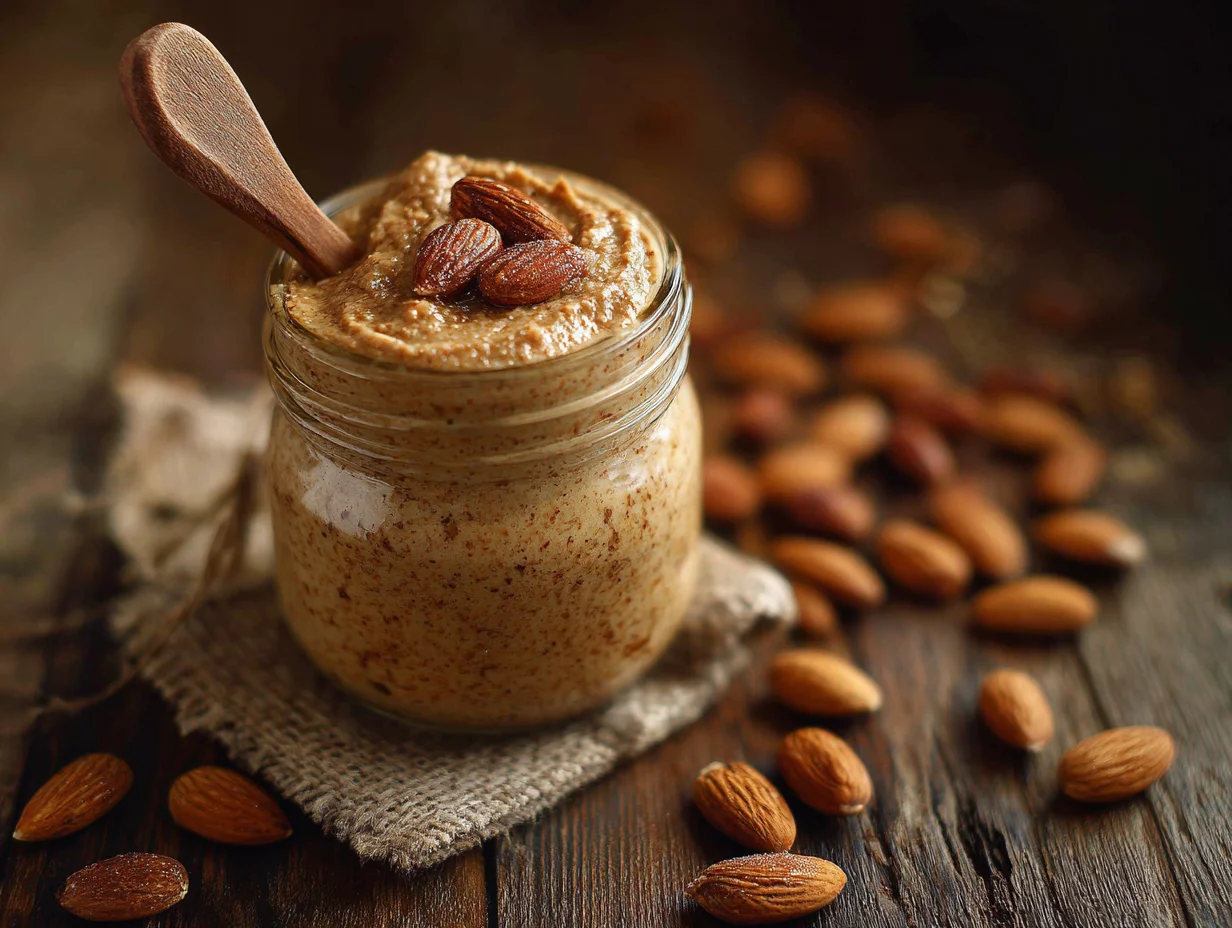
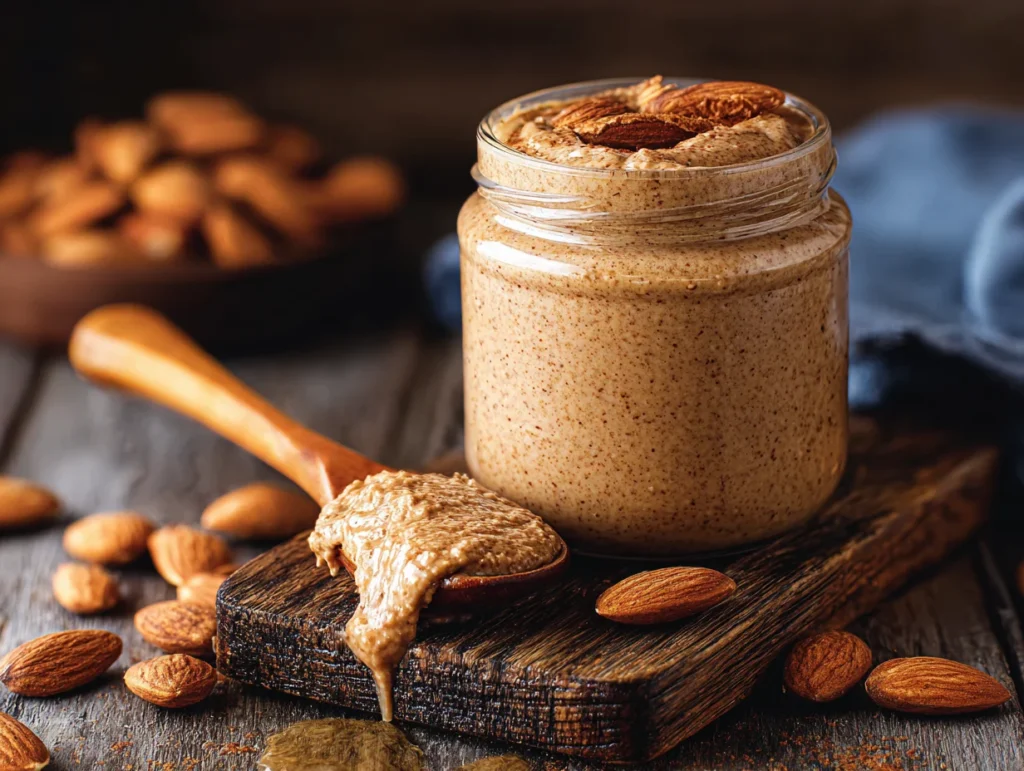
There are few things more rewarding in the kitchen than transforming a single ingredient into something rich, silky, and versatile. Homemade almond butter is one of those recipes,it’s simple, wholesome, and far superior to any store-bought version. With just almonds and a little patience, you can create a nut butter that’s naturally creamy, subtly sweet, and endlessly adaptable to both sweet and savory dishes.
Ingredients List
- 3 cups raw almonds
- ½ teaspoon sea salt (optional)
- 1–2 tablespoons honey or maple syrup (optional, for sweetness)
- 1 tablespoon neutral oil (optional, for extra creaminess)
Step-by-Step Instructions
Step 1: Toast the almonds
Preheat your oven to 350°F (175°C). Spread almonds evenly on a baking sheet and roast for 8–10 minutes until fragrant and lightly golden. This enhances flavor and helps release natural oils.
Step 2: Cool slightly
Remove from the oven and let the almonds cool for about 5 minutes. They should still be warm but not hot when blending.
Step 3: Start blending
Transfer almonds to a high-powered food processor. Blend on high speed, stopping occasionally to scrape down the sides. At first, they will turn into coarse crumbs, then a thick paste.
Step 4: Keep processing
Continue blending for 10–15 minutes. The almonds will go through stages—crumbly, pasty, clumpy—before finally becoming smooth and creamy. Be patient; this transformation is worth the wait.
Step 5: Add flavor (optional)
Once creamy, add sea salt, honey, or maple syrup if desired. Blend again until incorporated. If you prefer a thinner texture, drizzle in a little neutral oil.
Step 6: Store
Transfer almond butter into a clean, airtight jar. Let it cool fully before sealing.
Cook Time
15–20 minutes (including roasting and processing time)
Servings
About 16 servings (2 tablespoons per serving from 3 cups almonds)
Nutritional Information (approx. per serving)
- Calories: 190 kcal
- Protein: 7 g
- Fat: 17 g
- Carbohydrates: 6 g
- Fiber: 3 g
- Sugar: 1 g
Storage Instructions
- Store in a sealed jar at room temperature for up to 2 weeks.
- For longer freshness, refrigerate for up to 1 month.
- Stir before use if natural oils separate.
Suggestions
- Spread on toast, pancakes, or waffles.
- Swirl into oatmeal, yogurt, or smoothie bowls.
- Use as a base for energy balls or protein snacks.
- Drizzle over roasted fruit or use in baking recipes for a nutty richness.
Seasonal Relevance
Almond butter transcends seasons—it’s a year-round kitchen essential. In winter, it pairs beautifully with warm cereals and baked goods, while in summer, it’s a refreshing addition to smoothie bowls and fruit platters. Its versatility makes it timeless.
Conclusion
Homemade almond butter is proof that the simplest recipes often yield the most rewarding results. With its creamy texture and naturally nutty flavor, it’s a staple that can elevate breakfasts, snacks, and desserts alike. Once you try this easy homemade recipe, you’ll never look back at store-bought jars again.
Almond Butter Recipe Easy Homemade
16
servings5
minutes15
minutes190
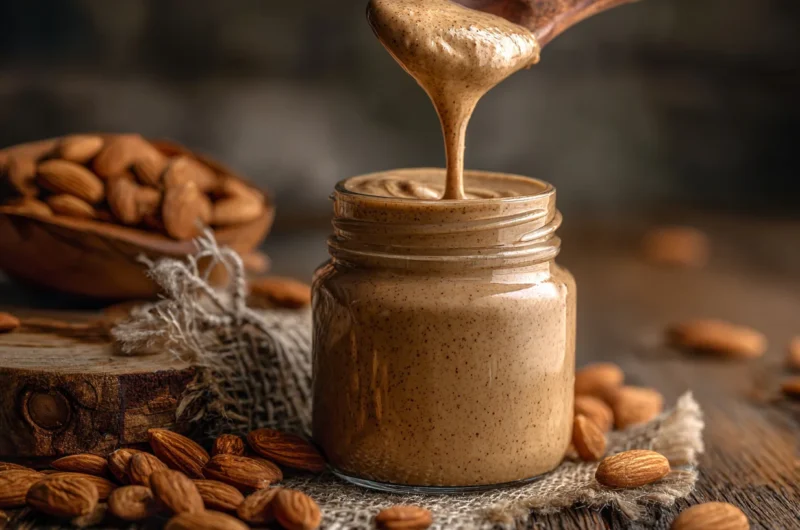
kcalA creamy, nutty, and wholesome almond butter made from scratch with just a handful of ingredients. This homemade version is healthier, fresher, and more flavorful than any store-bought option. Perfect for spreading, drizzling, or adding to recipes.
Ingredients
3 cups raw almonds
½ teaspoon sea salt (optional)
1–2 tablespoons honey or maple syrup (optional, for sweetness)
1 tablespoon neutral oil (optional, for creaminess)
Directions
- Preheat oven to 350°F (175°C). Spread almonds on a baking sheet and roast for 8–10 minutes until lightly golden and fragrant.
- Let almonds cool for 5 minutes, then transfer to a food processor.
- Blend on high, scraping down sides as needed. The almonds will go from crumbs → paste → clumps → creamy butter over 10–15 minutes.
- Add sea salt, honey/maple syrup, or oil if desired, and blend until smooth.
- Transfer to a clean airtight jar and let cool before sealing.
Recipe Video
Notes
- Store at room temperature up to 2 weeks or refrigerate for up to 1 month.
- Stir before use if natural oils separate.
- For extra flavor, add a pinch of cinnamon or vanilla extract.
- Roasting almonds is optional but enhances flavor and makes blending easier.
FAQs
Q1: Do I need to peel the almonds before making almond butter?
No, you don’t need to peel them. The skins add extra fiber and flavor, though using blanched almonds will give a slightly smoother texture.
Q2: Can I make almond butter without roasting the almonds?
Yes, raw almond butter can be made, but roasting brings out a deeper, nuttier flavor and helps the almonds release their oils more easily.
Q3: What if my food processor overheats during blending?
Pause blending and let it cool down for a few minutes before continuing. The process takes time, so giving your machine breaks is perfectly fine.