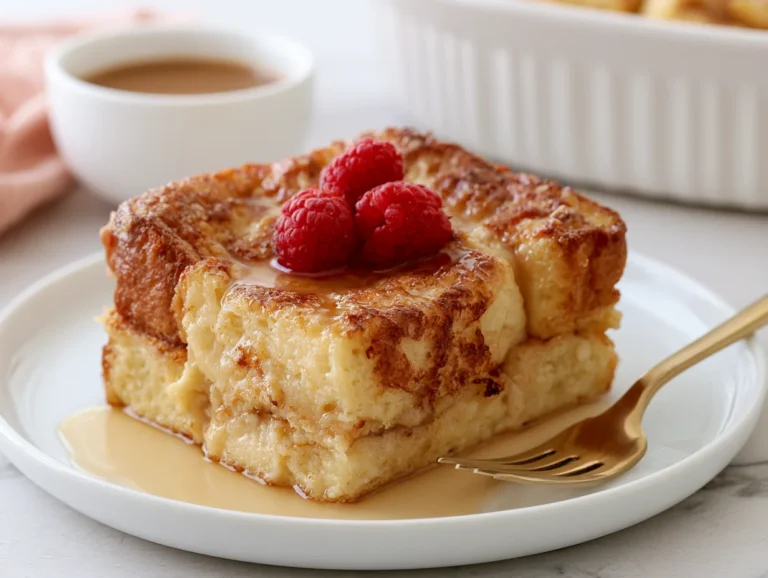
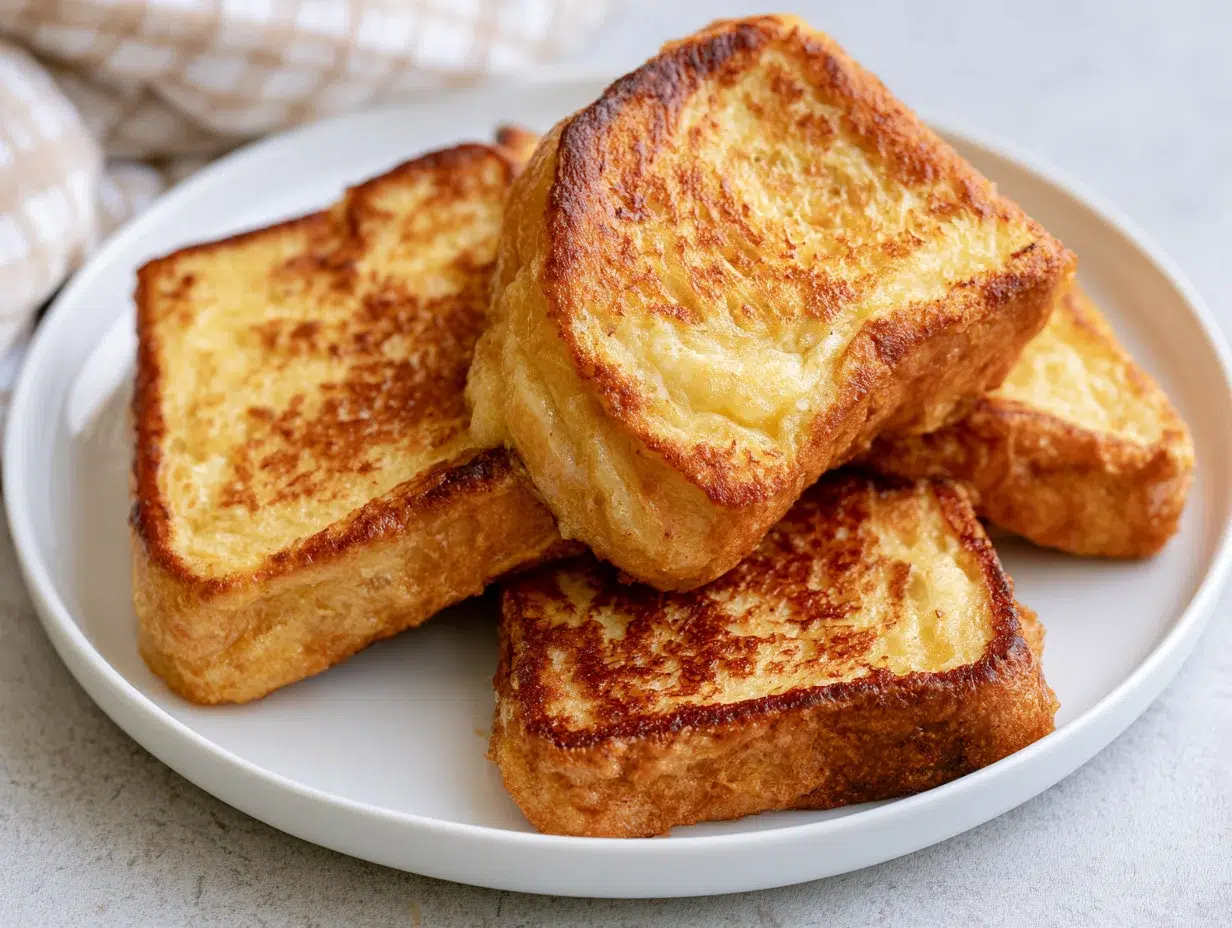
Golden Stovetop French Toast with Crispy Edges is the kind of breakfast that instantly elevates an ordinary morning into something special. With its caramelized crust and custardy soft center, every bite delivers the perfect balance of texture and flavor.
What makes this recipe truly irresistible is the contrast between the lightly crisped edges and the warm, pillowy interior. Cooked gently on the stovetop, it develops a golden-brown finish that feels both rustic and indulgent, like something served in a high-end brunch café.
This French toast is not just about taste—it’s about experience. The aroma of butter sizzling in the pan, the sweetness of vanilla drifting through the kitchen, and the satisfying crunch when you cut into it all come together beautifully.
Whether you’re preparing a weekend breakfast or a special brunch spread, this recipe guarantees comfort, elegance, and simplicity in every slice.
Ingredients You’ll Need
A truly perfect French toast starts with balance—soft bread, rich custard, and just the right touch of sweetness. This recipe keeps things simple yet deeply flavorful, allowing each ingredient to shine without overpowering the dish.
(One of the things I love about this recipe is that it uses simple pantry ingredients. You probably already have most of them in your kitchen.)
Base Ingredients:
- 4 slices thick bread (brioche or challah preferred)
- 2 large eggs
- 1/2 cup milk
- 1 tsp vanilla extract
- 1 tbsp sugar
- 1/2 tsp cinnamon
- 2 tbsp butter (for cooking)
- Pinch salt
Optional Add-ins:
- 1 tbsp honey (for extra sweetness)
- 1/4 tsp nutmeg
- 1 tbsp cream cheese (for richness)
- Fresh berries (for topping)
- Maple syrup (for serving)
Step-by-Step Instructions
Step 1: Prepare the Custard Base
In a mixing bowl, whisk together eggs, milk, vanilla extract, sugar, cinnamon, and a pinch of salt until fully combined. The mixture should be smooth and slightly frothy. This custard is what gives the French toast its soft, rich interior. Make sure everything is well blended so the bread absorbs flavor evenly without any eggy streaks.
Step 2: Soak the Bread Properly
Dip each slice of bread into the custard mixture, allowing it to soak for about 10–15 seconds per side. Do not oversoak, or the bread may become too fragile. The goal is to let the mixture penetrate without breaking the structure, ensuring a creamy center after cooking.
Step 3: Heat and Cook to Golden Perfection
Heat a non-stick skillet over medium heat and melt butter until slightly bubbling. Place soaked bread slices on the pan and cook for 2–3 minutes per side. Press lightly with a spatula to ensure even browning and achieve those signature crispy edges.
Step 4: Finish and Serve Warm
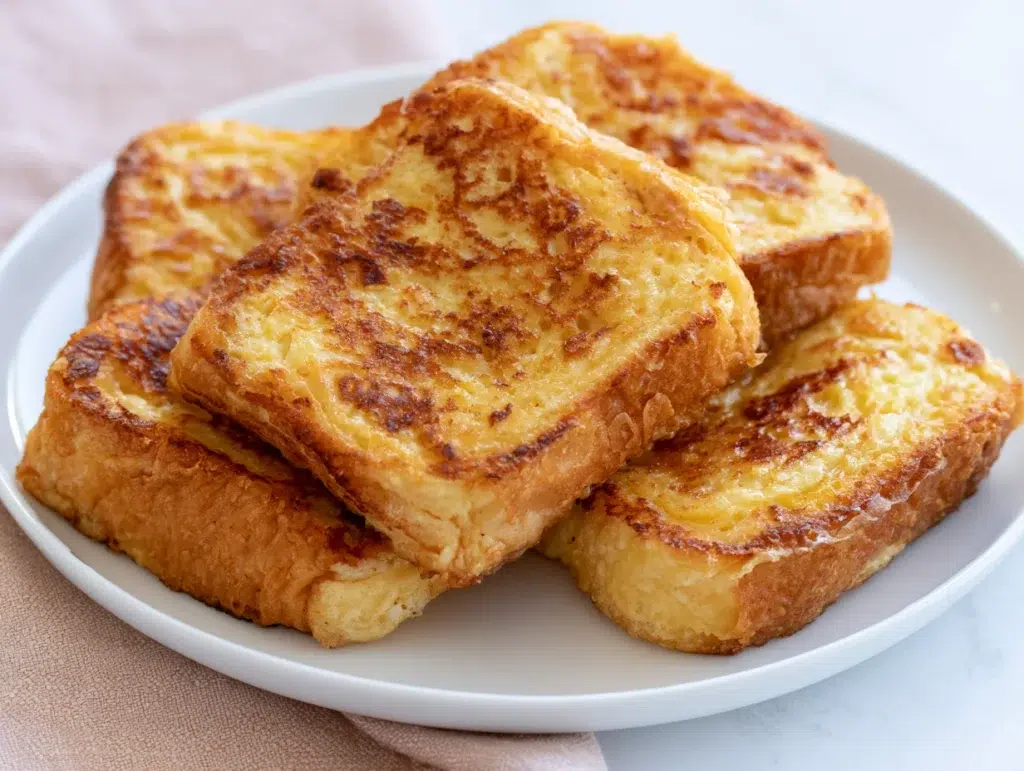
Once both sides are golden brown, remove from the pan and serve immediately. Add toppings like maple syrup, berries, or powdered sugar. The toast should be crisp outside and soft inside, delivering the perfect contrast in every bite.
Cook Time
Total:
15–20 minutes
Prep:
5–7 minutes
Bake:
10–12 minutes (stovetop cooking time)
Servings
This recipe yields a comforting and satisfying breakfast suitable for a small family or a cozy brunch gathering. It is perfectly portioned for those who want a rich yet balanced morning meal without excess.
Makes approximately 2 servings (4 slices total). Each serving delivers a hearty combination of protein, carbohydrates, and fats, making it both filling and energizing.
You can easily double the recipe for larger groups. It scales beautifully without losing texture or flavor, making it ideal for weekend brunches or special occasions.
Common Mistakes in This Recipe
One common mistake is using very thin bread. Thin slices absorb too much custard and become soggy, losing structure during cooking. Thick-cut bread is essential for achieving the desired crisp edges and soft center contrast.
Another issue is overheating the pan. High heat burns the exterior quickly while leaving the inside undercooked. Medium heat ensures even cooking and a golden crust without bitterness.
Over-soaking the bread is another frequent error. When bread sits too long in the custard, it falls apart in the pan. A quick dip is enough for proper absorption.
Lastly, skipping butter or using too little fat reduces flavor and prevents proper caramelization. Butter not only prevents sticking but also creates the rich golden crust that defines this recipe.
Solutions to Common Mistakes
To fix soggy bread issues, always choose sturdy options like brioche or challah. Slightly stale bread works even better because it absorbs custard without collapsing.
If heat control is a problem, preheat the pan for a few minutes on medium flame before adding butter. This ensures consistent cooking and prevents burning or uneven browning.
To avoid over-soaking, count 10–15 seconds per side while dipping. This small adjustment keeps the structure intact while still infusing flavor throughout the bread.
For better flavor and texture, always use real butter and allow it to melt until lightly foamy before placing the bread. This creates the signature crispy edge and enhances overall taste.
Nutritional Information (approx. per serving)
- Calories: 280–320 kcal
- Protein: 9–11 g
- Carbohydrates: 28–32 g
- Fat: 14–16 g
- Sugar: 6–9 g
- Fiber: 1–2 g
This French toast provides a balanced mix of energy-giving nutrients, making it an ideal breakfast choice. The eggs contribute high-quality protein, supporting muscle repair and satiety throughout the morning.
The carbohydrates from bread provide quick energy, while the fats from butter help create lasting fullness. This combination makes it both comforting and functional for active mornings.
Milk and eggs also contribute calcium and essential vitamins, supporting bone health and overall wellness. It’s a simple dish that still offers meaningful nutritional value.
When topped with fruits, it becomes even more nutrient-rich, adding antioxidants and fiber that support digestion and immunity.
Storage Instructions
French toast is best enjoyed fresh, but leftovers can still be stored effectively. Allow slices to cool completely before storing to prevent condensation and sogginess.
Place them in an airtight container and refrigerate for up to 2–3 days. Proper storage helps maintain flavor and prevents moisture loss.
For longer storage, freeze individual slices with parchment paper between them. This keeps them from sticking and preserves texture.
Reheat in a skillet or toaster oven instead of a microwave to restore crisp edges and maintain the original golden finish.
Suggestions
Serve this French toast with fresh seasonal fruits like strawberries, bananas, or blueberries for added freshness and natural sweetness. The contrast enhances both flavor and presentation.
You can also drizzle maple syrup or honey for a classic touch. For a gourmet twist, add whipped cream or nut butter.
Pair it with hot coffee, cappuccino, or freshly brewed tea to complete the breakfast experience. The warmth of the drink balances the richness of the toast.
For special occasions, dust with powdered sugar and add edible flowers or chocolate drizzle to elevate its visual appeal.
Seasonal Relevance
This recipe works beautifully year-round, but it feels especially comforting during cooler months. The warm, buttery aroma makes it a perfect winter breakfast option.
In spring and summer, it pairs wonderfully with fresh fruits, making it lighter and more refreshing. The seasonal adaptability keeps it relevant in all climates.
During festive seasons, it becomes a crowd-pleasing brunch centerpiece. Its simplicity allows easy scaling for family gatherings and celebrations.
Even in autumn, the cinnamon notes blend perfectly with seasonal spices, creating a cozy, nostalgic breakfast experience.
Final Words
Golden Stovetop French Toast with Crispy Edges is more than just a breakfast—it’s a comforting ritual that brings warmth to the table. Its simplicity is what makes it so powerful.
With just a few basic ingredients, you can create something that feels indulgent yet familiar. It’s a recipe that never fails to impress, whether served casually or for guests.
The balance of crispy edges and soft center makes every bite satisfying. It’s proof that simple cooking techniques can create extraordinary results.
Once you try this version, it may easily become your go-to French toast recipe for years to come.
Frequently Asked Questions
Can I use regular sandwich bread instead of brioche?
Yes, but brioche or challah is highly recommended because they hold the custard better and create a richer texture. Regular sandwich bread may become too soft and lose structure, but if used lightly toasted, it can still work reasonably well.
Why is my French toast turning soggy in the middle?
This usually happens when the bread is over-soaked or too thin. Using thick slices and dipping them briefly helps prevent sogginess. Also, cooking on medium heat ensures the inside cooks properly while the exterior stays crisp.
Can I make the custard mixture ahead of time?
Yes, the custard can be prepared a few hours in advance and stored in the refrigerator. Just whisk it again before using to ensure everything is well combined. Freshly mixed custard gives the best flavor and consistency.
Golden Stovetop French Toast with Crispy Edges
2
servings5
minutes10
minutes280
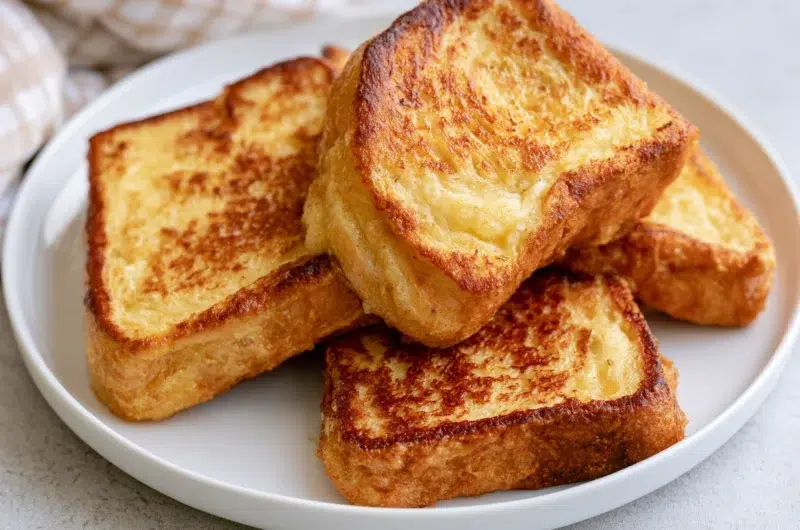
kcalGolden Stovetop French Toast with Crispy Edges is a rich, custardy breakfast classic made with simple ingredients. It features a golden crust, soft center, and warm vanilla-cinnamon flavor perfect for cozy mornings or brunch.
Ingredients
4 slices thick bread (brioche or challah preferred)
2 large eggs
1/2 cup milk
1 tsp vanilla extract
1 tbsp sugar
1/2 tsp cinnamon
2 tbsp butter (for cooking)
Pinch salt
1 tbsp honey (optional)
1/4 tsp nutmeg (optional)
1 tbsp cream cheese (optional)
Fresh berries (optional)
Maple syrup (for serving)
Directions
- Whisk eggs, milk, vanilla extract, sugar, cinnamon, and salt in a bowl until smooth and well combined.
- Dip each slice of bread into the custard mixture for 10–15 seconds per side without oversoaking.
- Heat a skillet over medium heat and melt butter until lightly bubbling.
- Cook soaked bread slices for 2–3 minutes per side until golden brown and crispy at the edges.
- Remove from pan and serve warm with maple syrup, berries, or powdered sugar.
Recipe Video
Notes
- Use thick bread like brioche or challah for best texture.
- Slightly stale bread absorbs custard better without becoming soggy.
- Maintain medium heat to avoid burning the crust before the inside cooks.
- Freshly cooked French toast is best served immediately for maximum crispiness.