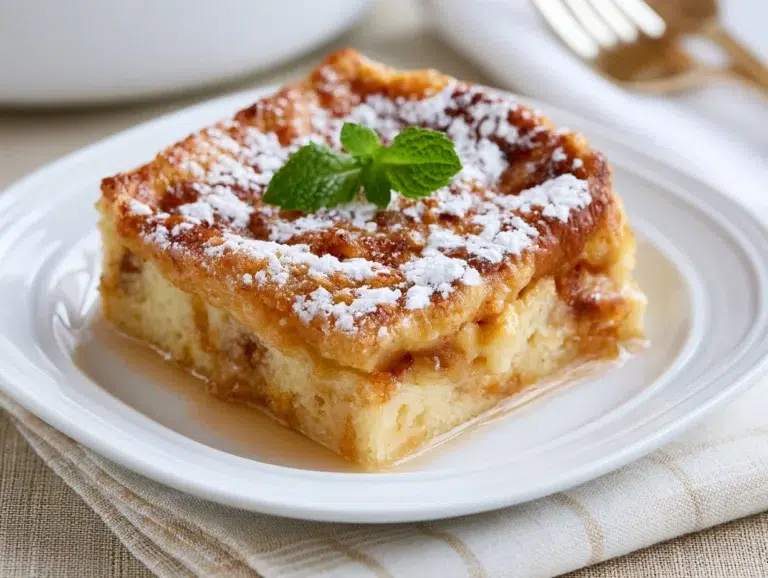
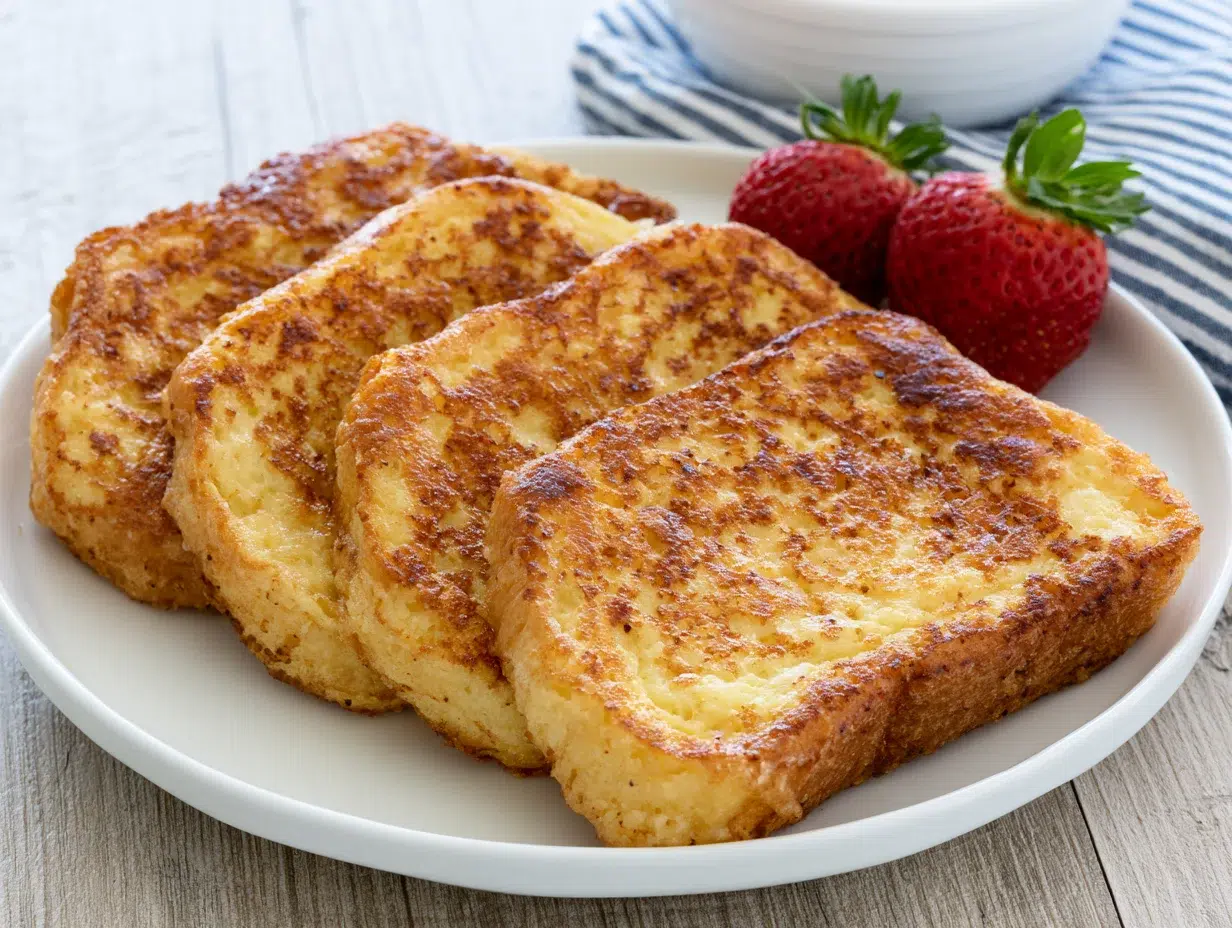
French toast is one of those timeless breakfast classics that never loses its appeal. When done right, it delivers a perfect harmony of crisp edges, soft custard-like centers, and warm, comforting flavor in every bite.
This recipe focuses on simplicity done with precision. Instead of overcomplicating the process, it highlights technique—how to balance the custard, choose the right bread, and achieve even golden browning every single time.
What makes this version stand out is consistency. Whether you’re cooking for one or preparing breakfast for a group, it delivers reliable results without guesswork or stress in the kitchen.
From busy weekday mornings to slow weekend brunches, this simple French toast recipe is designed to fit seamlessly into your routine while still feeling special and satisfying.
Ingredients You’ll Need
Great French toast doesn’t require complicated ingredients—just thoughtful balance and proper technique.
One of the things I love about this recipe is that it uses simple pantry ingredients. You probably already have most of them in your kitchen.
Base Ingredients:
- 6 slices thick bread (brioche, challah, or white bread)
- 3 large eggs
- ¾ cup milk
- 2 tbsp granulated sugar
- 1 tsp vanilla extract
- 1 tsp ground cinnamon
- ¼ tsp salt
- 2 tbsp butter (for cooking)
Optional Add-ins:
- ½ tsp nutmeg
- 1 tbsp maple syrup
- 1 tsp brown sugar
- ½ tsp orange zest
- 2 tbsp heavy cream
Step-by-Step Instructions
Step 1: Prepare the Custard Base
In a shallow bowl, whisk together eggs, milk, sugar, vanilla extract, cinnamon, and salt until fully combined. The mixture should be smooth and evenly blended, with no visible streaks of egg. This custard is the foundation of your French toast, and getting the balance right ensures a rich flavor and soft interior texture. Take a moment to fully incorporate the spices for consistent taste in every slice.
Step 2: Prepare the Bread
Choose thick slices of bread and allow them to sit slightly exposed to air if they are too fresh. Slightly stale bread works best because it absorbs the custard without breaking down. This step is essential for achieving structure and preventing sogginess. Arrange the slices nearby so they are ready for dipping without delay once the pan is heated.
Step 3: Dip and Coat Evenly
Dip each slice of bread into the custard mixture, coating both sides evenly. Allow excess liquid to drip off before transferring to a plate. Avoid soaking the bread too long, as it can become too fragile. The goal is even absorption that maintains structure while ensuring a soft, flavorful center after cooking.
Step 4: Cook Until Golden
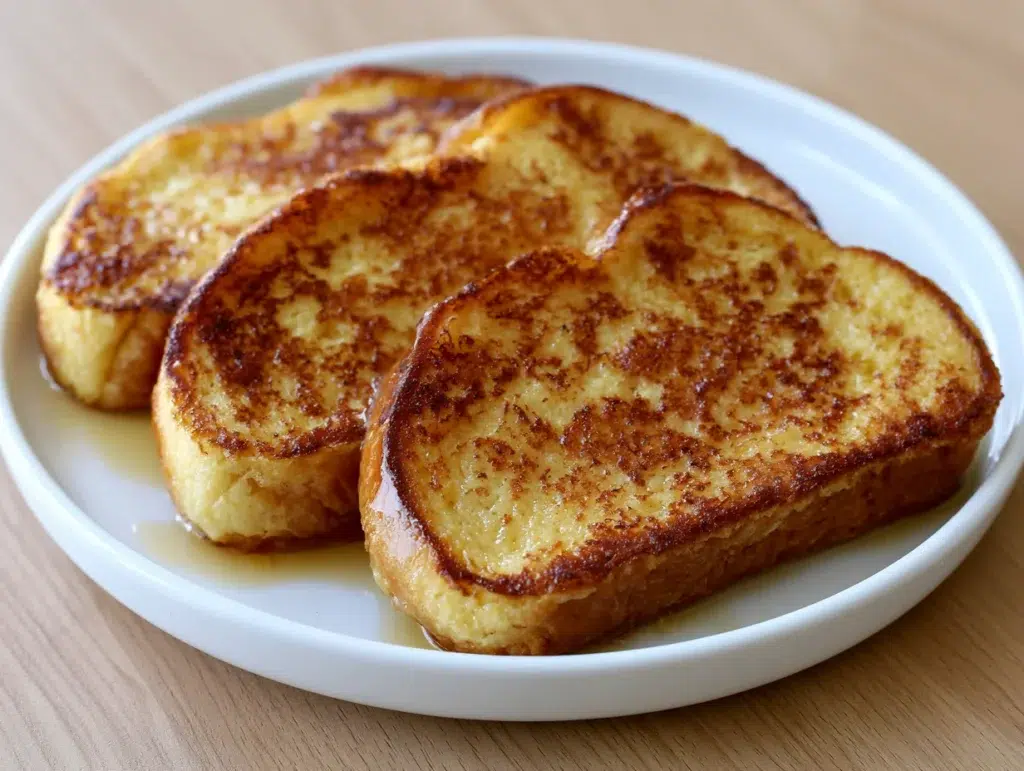
Heat butter in a skillet over medium heat. Place the soaked bread slices into the pan and cook for 2–4 minutes per side until golden brown. Avoid overcrowding the pan to ensure even heat distribution. Flip carefully once a golden crust forms. The final result should be crisp on the outside and tender inside.
Cook Time
Total:
20 minutes
Prep:
10 minutes
Bake:
10 minutes
Servings
This recipe is designed to be flexible, making it suitable for both solo breakfasts and family-style meals. It delivers consistent results no matter the portion size.
Makes approximately 3 to 4 servings, depending on slice thickness and appetite. Each serving is satisfying, balanced, and rich enough to stand alone or be paired with fruit or syrup.
Because of its simplicity, it can easily be scaled up for larger gatherings without compromising texture or flavor quality.
Common Mistakes in This Recipe
Using overly fresh or soft bread often leads to soggy French toast that lacks structure after cooking.
Another common mistake is over-soaking the bread, which causes it to break apart during cooking and lose its shape.
Cooking on high heat may burn the outside quickly while leaving the inside undercooked and uneven.
Skipping proper seasoning in the custard results in bland flavor despite correct cooking technique.
Solutions to Common Mistakes
Use slightly stale bread or lightly toast fresh slices before dipping to improve absorption and structure.
Dip bread quickly and evenly, allowing just enough custard to coat without oversaturating.
Cook over medium heat to allow gradual browning and even cooking throughout the slice.
Always season the custard properly with cinnamon, vanilla, and salt for balanced flavor.
Nutritional Information (approx. per serving)
- Calories: 290 kcal
- Protein: 10g
- Fat: 13g
- Carbohydrates: 32g
- Fiber: 2g
- Sugar: 11g
Eggs provide high-quality protein that supports energy and muscle function throughout the day.
Milk contributes calcium and helps create the creamy custard texture essential to French toast.
Cinnamon adds natural antioxidants and enhances flavor without adding extra calories.
When prepared thoughtfully, this dish offers a balanced breakfast that feels both comforting and nourishing.
Storage Instructions
Allow French toast to cool completely before storing to prevent moisture buildup.
Store leftovers in an airtight container in the refrigerator for up to 3 days.
For longer storage, freeze slices individually for easy reheating later.
Reheat in a skillet or oven to restore crisp edges and warm center texture.
Suggestions
Serve with maple syrup, honey, or fruit compote for a classic finishing touch.
Pair with fresh berries or sliced bananas for a refreshing contrast.
Dust with powdered sugar for a simple yet elegant presentation.
Add whipped cream or nut butter for a more indulgent breakfast option.
Seasonal Relevance
This recipe works beautifully throughout the year, adapting easily to seasonal ingredients.
In colder months, it offers warmth and comfort that pairs perfectly with hot drinks.
During spring and summer, it can be served with fresh fruits for a lighter feel.
Its versatility makes it a dependable breakfast choice for any occasion.
Final Words
Simple French toast proves that great cooking doesn’t require complexity—just attention to detail and balance.
With the right technique, even basic ingredients can create something truly satisfying and memorable.
This recipe is designed for reliability, making it a go-to option for everyday breakfasts.
Once mastered, it becomes one of those dishes you can prepare effortlessly and confidently.
Frequently Asked Questions
What is the best type of bread for simple French toast?
Thick-cut bread like brioche, challah, or sturdy white bread works best because it absorbs custard well without falling apart. Slightly stale bread is ideal as it holds structure better and produces a crisp exterior with a soft, custardy interior after cooking.
How do I prevent French toast from becoming soggy?
Avoid over-soaking the bread and ensure your custard is properly balanced. Cooking over medium heat also helps evaporate excess moisture while creating a golden crust. Using slightly dry bread is another key factor in preventing sogginess and maintaining structure.
Can I make French toast without cinnamon or vanilla?
Yes, you can skip them, but they significantly enhance flavor. Without them, the toast will taste more neutral. You can substitute with nutmeg, citrus zest, or a small amount of maple syrup to maintain depth and aromatic richness in the dish.
Simple French Toast Made Perfect Every Time
3
servings10
minutes10
minutes290
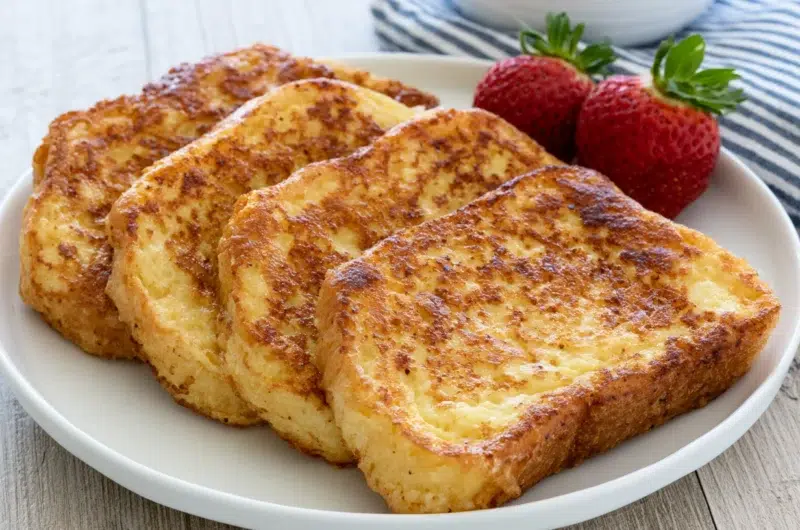
kcalSimple French toast made with thick bread, eggs, milk, and warm cinnamon. Crispy on the outside and soft inside, this easy recipe delivers perfect results every time for a quick, comforting breakfast or brunch.
Ingredients
6 slices thick bread (brioche, challah, or white bread)
3 large eggs
¾ cup milk
2 tbsp granulated sugar
1 tsp vanilla extract
1 tsp ground cinnamon
¼ tsp salt
2 tbsp butter (for cooking)
½ tsp nutmeg (optional)
1 tbsp maple syrup (optional)
1 tsp brown sugar (optional)
½ tsp orange zest (optional)
2 tbsp heavy cream (optional)
Directions
- Whisk eggs, milk, sugar, vanilla, cinnamon, and salt in a bowl.
- Dip bread slices into the mixture, coating evenly.
- Heat butter in a skillet over medium heat.
- Cook bread for 2–4 minutes per side until golden brown.
- Remove and serve warm with syrup or toppings.
Recipe Video
Notes
- Use slightly stale bread for best texture.
- Do not oversoak bread to avoid sogginess.
- Cook on medium heat for even browning.
- Serve immediately for best taste and texture.